PSHE
We believe that PSHE is an essential part of preparing our children for life, now and in the future. Our PSHE curriculum, guided by the PSHE Association Programme of Study, equips pupils with the knowledge, skills, and attributes they need to stay healthy, build positive relationships, and thrive as responsible citizens in an ever-changing world.
Our PSHE curriculum aims to:
• Promote the health, safety and wellbeing of all pupils.
• Develop children’s understanding of themselves, others, and the world they live in.
• Equip pupils with strategies to make informed choices, manage risks, and seek help when needed.
• Foster respect, empathy, and appreciation of diversity in all its forms.
• Prepare children to play an active role as members of their community and the wider society.
Our PSHE teaching is organised under the three core themes recommended by the PSHE Association:
Health and Wellbeing
• Developing knowledge and skills to maintain physical and mental health.
• Learning how to manage feelings, develop resilience, and seek support.
• Understanding how to make healthy lifestyle choices, including nutrition, exercise, sleep and personal hygiene.
• Learning strategies to keep safe in different contexts, including online.
Relationships
• Learning how to build and maintain positive friendships and family relationships.
• Understanding respect, kindness, equality, and diversity.
• Developing skills for resolving conflict and recognising and managing peer pressure.
• Learning about consent, privacy, and personal boundaries, appropriate to age.
Living in the Wider World
• Exploring rights, responsibilities, and respect in school, local and global communities.
• Understanding the importance of caring for the environment.
• Developing an awareness of money, economic wellbeing, and aspirations for the future.
• Learning how to use technology responsibly and safely.
PSHE is taught regularly through discrete lessons, assemblies, cross-curricular links, and enrichment opportunities. The PSHE Curriculum and Lessons are adapted to meet the needs of all pupils and specific cohorts, ensuring inclusivity and sensitivity. Our My Health, My School Survey results are used to inform any adaptations in addition to school-wide observations. We use age-appropriate resources recommended by the PSHE Association to support high-quality teaching and learning.
In EYFS, PSHE is embedded through the EYFS statutory framework areas of Personal, Social and Emotional development, and Understanding the World. Learning and development opportunities for these areas, as well as Communication and language, can be interwoven within the pupils’ experience through daily EYFS play-based activities, role-play areas, quality children’s fiction and reflective discussion to begin to build pupils’ knowledge and understanding, skills, attitudes and attributes related to PSHE elements of education.
Sex and Relationship Education (SRE) is taught in Y2, Y4 and Y6. Our SRE programme helps pupils to develop the knowledge, understanding, skills and attitudes they need to live confident, healthy, independent lives now and in the future. Throughout the unit, children learn about the biological differences between male and female (Y2), maintaining healthy relationships (Y2, Y4, Y6) and the physical changes associated with puberty (Y4, Y6).
As well as the PSHE curriculum, we also teach MindMate sessions across Key Stage One and Key Stage Two. These sessions help to develop children’s social, emotional and mental health (SEMH) and are taught once per half term. These days are often supported by other tasks that develop children’s emotional literacy, as teachers feel necessary and appropriate. Our bespoke Hearts and Minds Wellbeing lessons also supports pupils’ personal development by addressing relevant and current wellbeing themes for each cohort. It promotes emotional literacy, resilience and positive relationships, helping pupils understand both their own feelings and those of others.
Again, these are supported by the PSHE Lead.
Assessment in PSHE is an integral part of each topic. A pre-assessment is completed so that, along with clear handover information, teachers can address misconceptions, fill any gaps in knowledge and build on prior knowledge effectively. A post-assessment is also done so staff are able to measure progress. For most strands, and as age-appropriate, children will complete a self-reflection encouraging self-evaluation. Alongside these strategies, teachers assess formatively using their knowledge of a child’s starting points and post-teaching points. This supports an effective handover and allows the PSHE Lead to monitor progress.
Kirkstall Valley prides itself on meeting the needs of each individual. If a teacher identifies that a child may need more emotional wellbeing input than their whole class teaching allows, they will discuss it with the PSHE Lead, Learning Mentor or SENDCo (Emotional Wellbeing Team). The child may then receive a variety of interventions to help them thrive.
PSHE and RSE curriculum overview
PSHE, RSE, SMSC and Citizenship curriculum
Through our PSHE curriculum, children will:
• Develop confidence, self-awareness and resilience.
• Form positive, respectful and safe relationships.
• Understand how to keep themselves physically and emotionally healthy.
• Contribute positively to their school and community.
• Be prepared for the opportunities and challenges of later life.
For more information on our PSHE curriculum, please speak to Mr Lund.
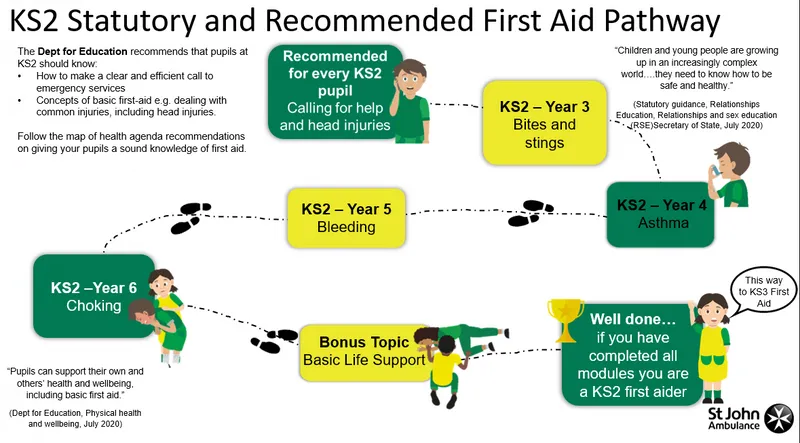
First Aid at KVPS
As well as our curricular-based learning (detailed below), our PTA also provide extended regular first-aid training for our children. We believe these are essential life skills for our children.